
It’s a question I’m often asked between two rounds: “How do you become an arbiter?” Good news: you don’t need to be a strong player. You need to know the rules, want to help your club, and keep calm when the clock goes wild.
A step-by-step pathway, run by the DNA
In France, arbiter training is organised by the National Arbitration Directorate (DNA) of the French Chess Federation. The pathway moves forward in stages: each course is followed by an exam and practice in real events, before the corresponding title is awarded.
- Youth course: to discover arbitration from an early age
- Match course (from age 11, in person): arbitrating team matches
- Club course: club tournaments and local competitions
- Open course: rated opens, the Swiss system, tie-breaks
- Mentor and Manager skills: supporting new arbiters and leading a team
- Extra modules: in-depth thematic sessions
- FIDE seminar: the gateway to international titles
- Continuing education: keeping your knowledge up to date
Costs are modest: registration fees range from €25 to €70 depending on the course, according to the DNA training guide (September 2026), and €150 for the FIDE seminar.
How to take the first step
- Talk to your club: one more arbiter is always good news for team competitions!
- Check the list of courses on the DNA website and find a session near you
- Contact the Regional Arbitration Director (DRA) of your league: they know the upcoming sessions and can guide you
- Read the Arbiter’s Book (Livre de l’arbitre), the reference for French arbiters
My advice
Start small: arbitrate your club’s team matches, then offer your help at an open alongside an experienced arbiter. You learn the most in real events. That’s exactly how I started, in 2003, by taking over from my club’s arbiter.
Since summer 2026 I have been following the arbiter-trainer pathway myself: if you are organising a course or have a question about the pathway, write to me!
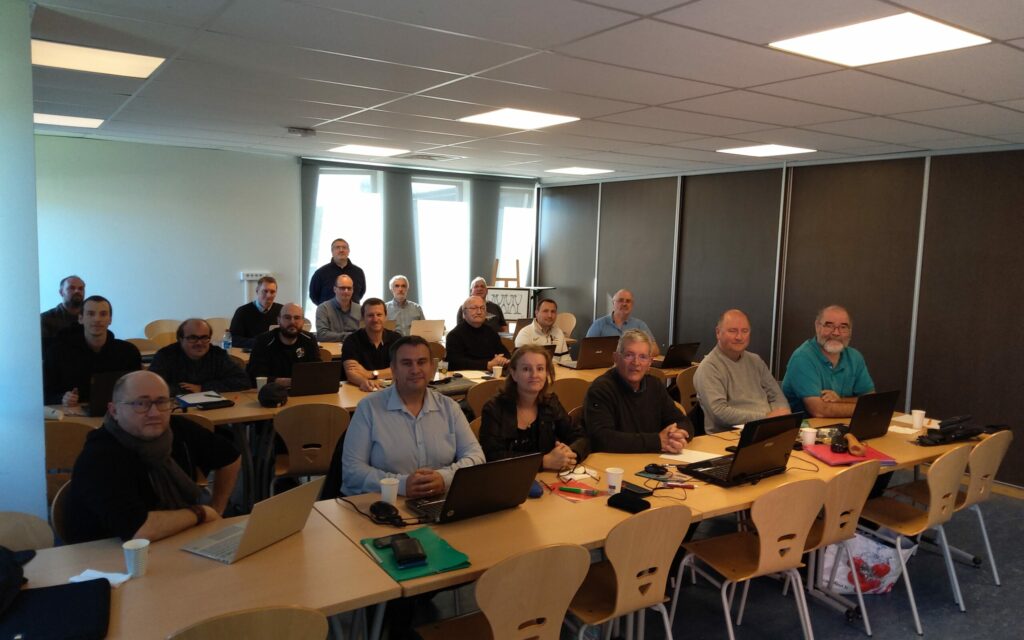
Illustration: a DNA training course in Marange-Silvange, Moselle (source: dna.ffechecs.fr).